

May 1, 2026
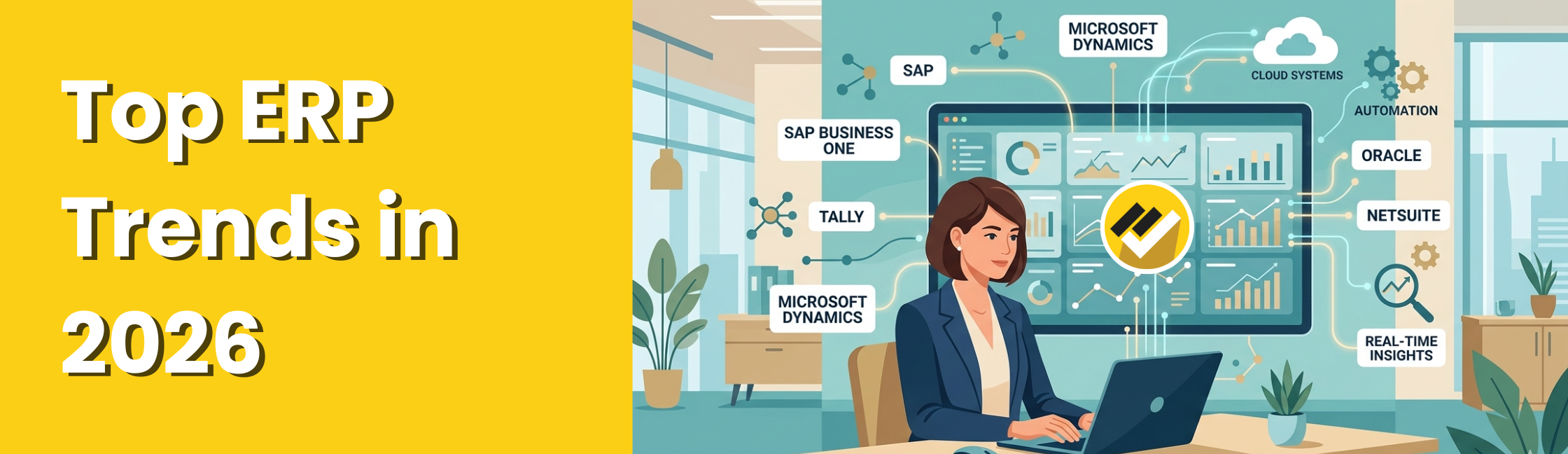
What are the top ERP reporting trends in 2026? The trends include AI-driven automation, cloud-first deployment, industry-specific ERP solutions, real-time financial reporting, ESG/sustainability integration, composable ERP architecture, IoT connectivity, advanced cybersecurity, low-code customization. Together, these trends are turning ERP from a simple data store into an intelligent business engine.
Top ERP Reporting Trends in 2026 Every Business Should Know
Gartner predicts that by 2030, AI will autonomously handle over 50% of routine ERP tasks across finance, HR and supply chain. The transformation is already well underway in 2026. Source: Gartner Predicts 2026: The Future of ERP
1. Top ERP Reporting Trends in 2026: AI-Driven Automation
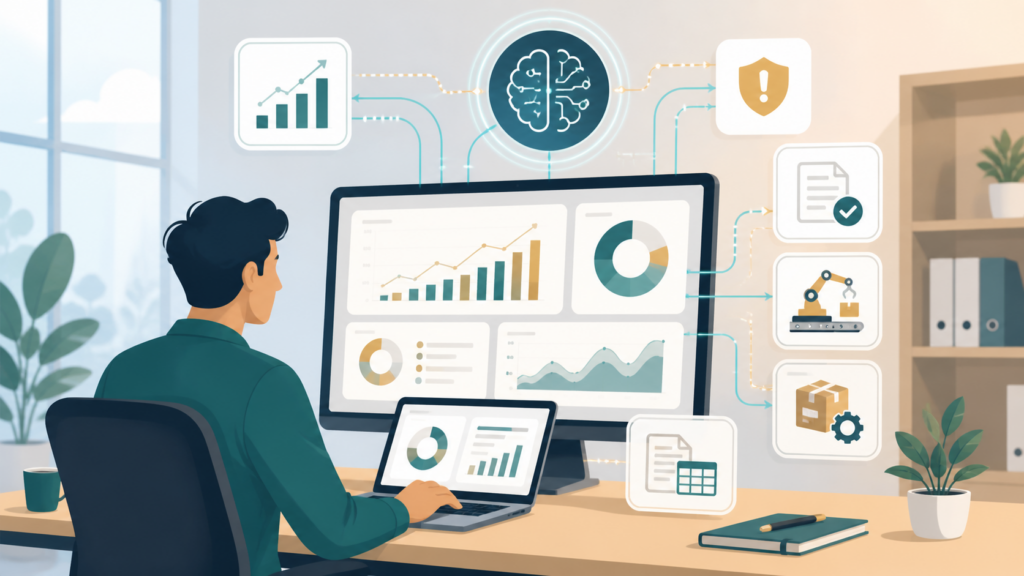
AI is no longer a future promise inside ERP, it is working right now. Modern ERP platforms use AI to forecast demand, flag unusual transactions, auto-generate purchase orders.
What does AI do inside an ERP today?
- Predicts which products will sell more next month
- Detects unusual financial activity before it becomes a problem
- Automates invoice processing and order management
- Drafts purchase orders based on real-time supplier pricing
- Embeds predictive analytics directly into daily workflows
2. Top ERP Reporting Trends in 2026: Cloud-First ERP
In 2026, cloud ERP is not just popular, it is the default choice for growing businesses. Cloud-native ERP platforms give teams access from anywhere, update automatically, and scale up without heavy IT infrastructure.
Key benefits of cloud ERP in 2026:
- Lower upfront cost, no expensive servers or hardware
- Remote access, your team works from office, home, or anywhere
- AI-ready foundation, cloud data is clean, unified, and ready for machine learning
3. Top ERP Reporting Trends in 2026: Industry-Specific ERP
Generic ERP systems are giving way to solutions built specifically for each industry. A food manufacturer needs recipe and batch management. A pharmaceutical company needs GMP compliance. A retail business needs e-commerce integration.
Industry-specific ERP reduces implementation time, lowers customization costs, and delivers faster ROI. In 2026, this trend dominates.
4. Top ERP Reporting Trends in 2026: ESG and Sustainability Reporting
Investors, regulators, and customers now expect businesses to track Environmental, Social and Governance (ESG) metrics, not just financial ones. In 2026, leading ERP platforms embed ESG dashboards directly into their core.
Companies can now track energy usage, waste, carbon footprint, and supplier ethics right inside their ERP and report on it in real time. Source: (Batchmaster)
5. Top ERP Reporting Trends in 2026: Composable ERP
Composable ERP means you start with a basic system that handles your core financial work. Then, you can add different tools or features as needed, like inventory, sales, or reporting. You only use the parts that are useful for your business and can remove anything you don’t need. This way, your system stays flexible and you are not stuck using one fixed or complicated software.
You add what you need, remove what you don’t and never get locked into rigid software.
6. Top ERP Reporting Trends in 2026: IoT Integration
ERP systems now connect directly to IoT devices on the factory floor, in warehouses and across supply chains. This gives managers live visibility into inventory, equipment health, and production output.
Equipment maintenance gets triggered by actual usage data, not guesswork. Which keeps operations running longer and cuts downtime.
7. Top ERP Reporting Trends in 2026: Low-Code Customization
In 2026, you no longer need a developer to adjust your ERP workflows. Low-code and no-code tools let finance managers, operations leads and sales teams modify processes, create reports, and build dashboards on their own.
This is exactly what EasyReports delivers. Non-technical users build customized financial reports from Tally, SAP B1, NAV, or D365 data without writing a single line of code.
8. Top ERP Reporting Trends in 2026: Automating Financial Statements
What Does Automating Financial Statements from ERP Actually Mean?
Automating financial statements means your ERP data flows directly into pre-built report templates, without anyone downloading to Excel, reformatting data manually.
Which Financial Statements Can You Automate from ERP?
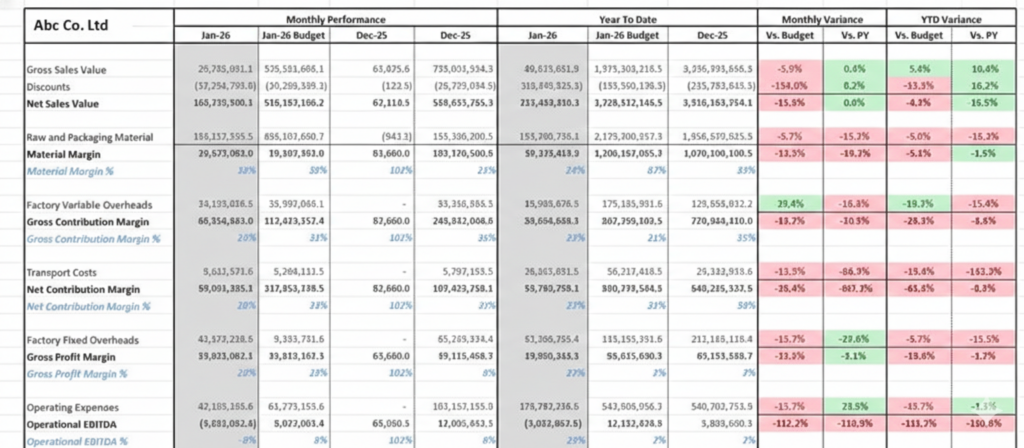
- Profit & Loss Statement (P&L): by product, location, salesperson, or business segment
- Balance Sheet: with real-time asset, liability, and equity figures
- Cash Flow Statement: track inflows and outflows live
- Budget vs Actuals: compare targets against real performance
- Debtor & Creditor Ageing Reports: know exactly who owes what and when
- Cost Centre Profitability Reports: drill into margins by department or project
How EasyReports Automates Financial Statements from ERPs?
EasyReports is a reporting and business intelligence automation tool built specifically for businesses running on ERP systems like Tally, SAP Business One, Microsoft Dynamics NAV, Business Central and D365.
Since 2011, EasyReports has deployed over 5,000 reports and dashboards for more than 1,000 businesses across 15+ countries, including companies like JindalX, Excel Entertainment, Taxmann, and Dasco Engineering.
How Does EasyReports Financial Statements APP Work? (Step-by-Step)
Automation requires structured implementation. We follow a defined workflow to ensure accuracy.
Step I: FS APP Installation & Configuration
Install the ER financial statement app in the system.
Step II: Standard FS Configuring Templates
FS APP provides Standard Mapping Templates that covers reporting formats for most businesses. These templates are available by default and can be downloaded, filled and uploaded back into the system.
Step III: Mapping Upload & Validation
Step by step process given below:
- Upload ledger mapping into FS APP
- Validate mapping accuracy
- Reconcile data
- Test financial report output
Outcome: System becomes fully ready to generate reports in the required format.
Step IV: Generate Financial Reports in Multiple Formats
Once mapping configuration and validation are complete, users can start generating financial reports directly from FS APP.
The system allows you to generate reports in three powerful formats:
- Pivot Format: Analyze financial data dynamically with drill-down capability.
- Spreadsheet Format: Download structured Balance Sheet and Profit & Loss statements in presentation-ready spreadsheet format.
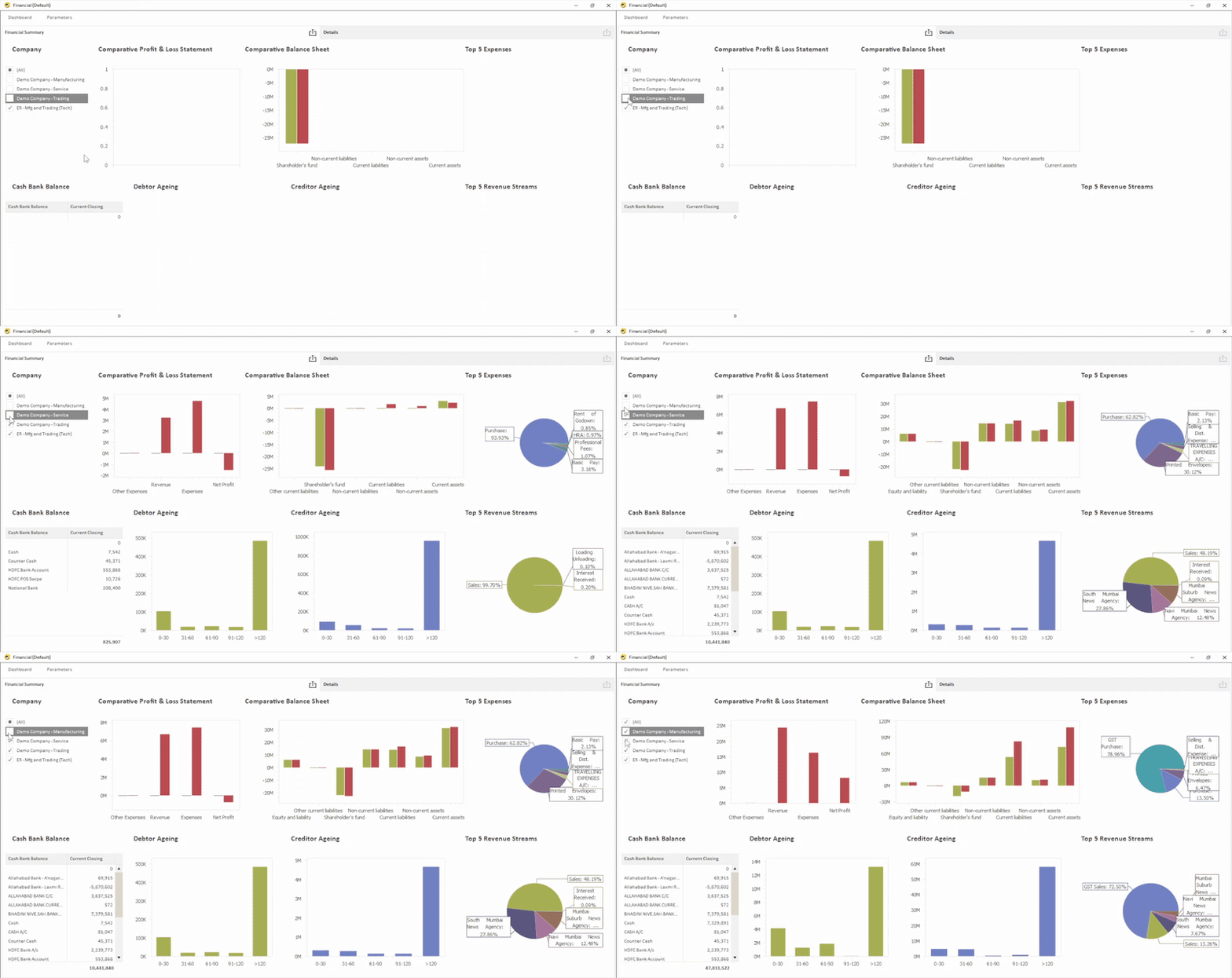
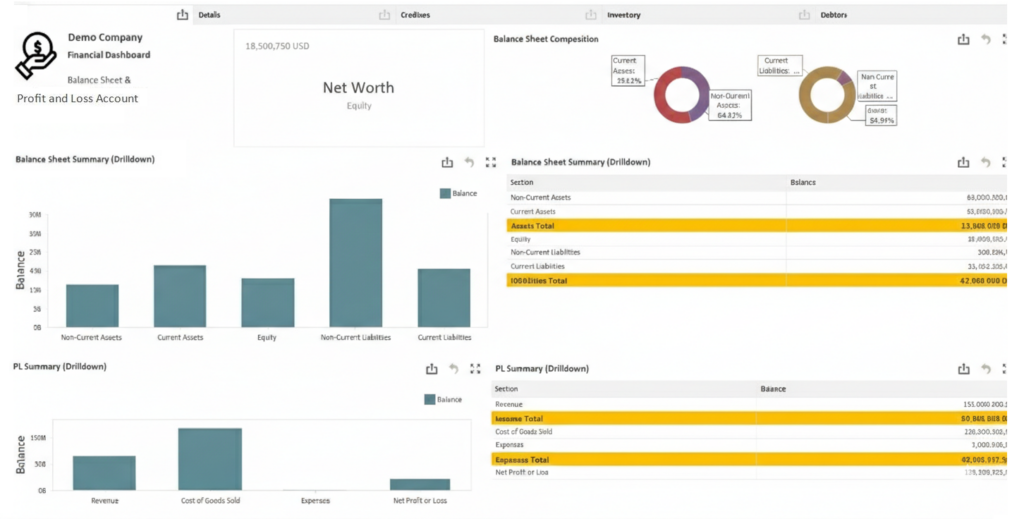
- Dashboard Format: View financial summaries in a visual dashboard format.
Automate your financial statements from ERP and get real-time insights without errors.
Schedule Your Free Demo Today!
FAQs
1. What are the top ERP reporting trends in 2026?
The trends include AI-driven automation, cloud-first ERP systems, real-time financial reporting, industry-specific ERP solutions, ESG reporting, IoT integration, and low-code customization. These trends are making ERP systems smarter and more business-focused.
2. How do the top ERP reporting trends in 2026 impact financial reporting?
Its transforming financial reporting by enabling automation, reducing manual work, and providing real-time insights. Businesses can now generate accurate financial statements directly from ERP systems without relying on spreadsheets.
3. Why is AI important in the top ERP reporting trends in 2026?
AI is a major part of the Top ERP Trends in 2026 because it helps automate repetitive tasks, detect anomalies, forecast demand, and improve decision-making. It turns ERP systems into intelligent business tools.
4. How does cloud ERP fit into the top ERP reporting trends in 2026?
Cloud ERP is a key component of the Top ERP Trends in 2026 as it allows businesses to access data from anywhere, scale easily, and maintain updated systems without heavy infrastructure costs.
5. Can ERP systems automate financial statements in 2026?
Yes, one of the key highlights of the Top ERP Trends in 2026 is the ability to automate financial statements. Businesses can generate Profit & Loss, Balance Sheet, and Cash Flow reports directly from ERP systems with tools like EasyReports.
6. What is the future of ERP based on the top ERP reporting trends in 2026?
Based on the top ERP reporting trends in 2026, ERP systems are moving toward automation, real-time analytics, and user-friendly customization. They are evolving from data storage systems into intelligent decision-making platforms.