

February 20, 2026
How does modern financial reporting work from trial balance to dashboard?
Modern financial reporting works by automatically importing trial balance data from multiple sources, mapping ledgers into a standardized financial structure, generating management-ready reports such as balance sheets, pivot reports, and dashboards, and distributing insights to stakeholders. This automated process eliminates manual consolidation and delivers accurate financial insights in real time.
What Is Modern Financial Reporting?
Modern financial reporting is the automated process of collecting, structuring and visualizing financial data from multiple sources ERPs, custom apps, Excel sheets or databases into management-ready outputs like dashboards, pivot reports and audit-ready spreadsheets.
Why Do Finance Teams Still Struggle with Reporting?
Most finance teams spend the majority of their month-end effort not on analysis, but on data collection and formatting.
This is exactly the problem that Smart Financial Statements by EasyReports solves by automating every step from trial balance to dashboard.
How Does Modern Financial Reporting Actually Work? (Step-by-Step)
Understanding how modern financial reporting actually works starts with a structured, four-step process.
Step 1: Capture Financial Data from Multiple Sources
Modern reporting tools like EasyReports import trial balance data from ERPs, Accounting software’s, Excel Uploads.
Step 2: Map Ledgers to a Standard Financial Structure
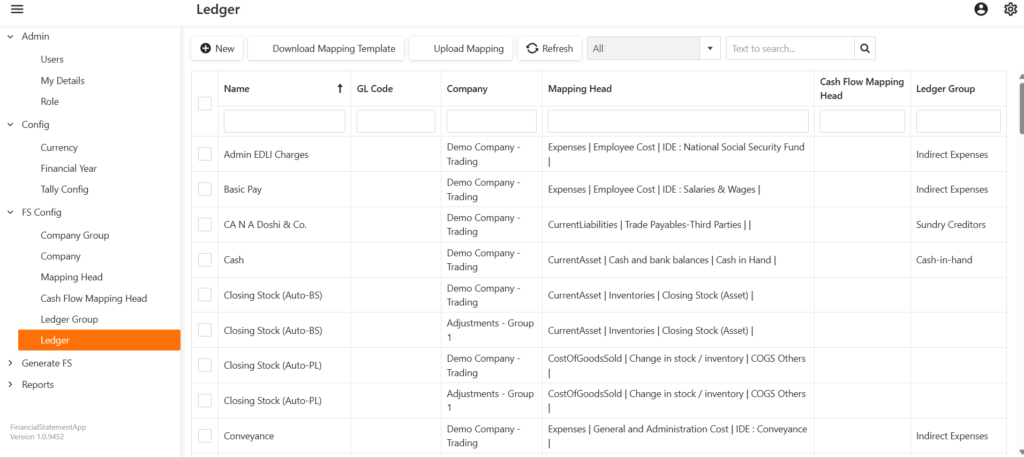
Configure Standard Mapping Templates in EasyReports FS APP to map ledgers into a uniform financial reporting structure.
Define your reporting hierarchy using Mapping Head templates and connect each ledger through Ledger Mapping so data flows into the correct financial statement sections.
Once uploaded and validated, Trial Balance data is automatically organized, enabling accurate and ready-to-use financial reports.
Step 3: Generate Reports in the Format Management Needs
Once mapping is complete, from EasyReports generate reports in three powerful formats automatically:
- Pivot Reports Drill-down analysis by entity, period, or ledger group.
- Structured Spreadsheets Presentation-ready Balance Sheet and Profit & Loss statements for auditors, boards, and statutory filing.
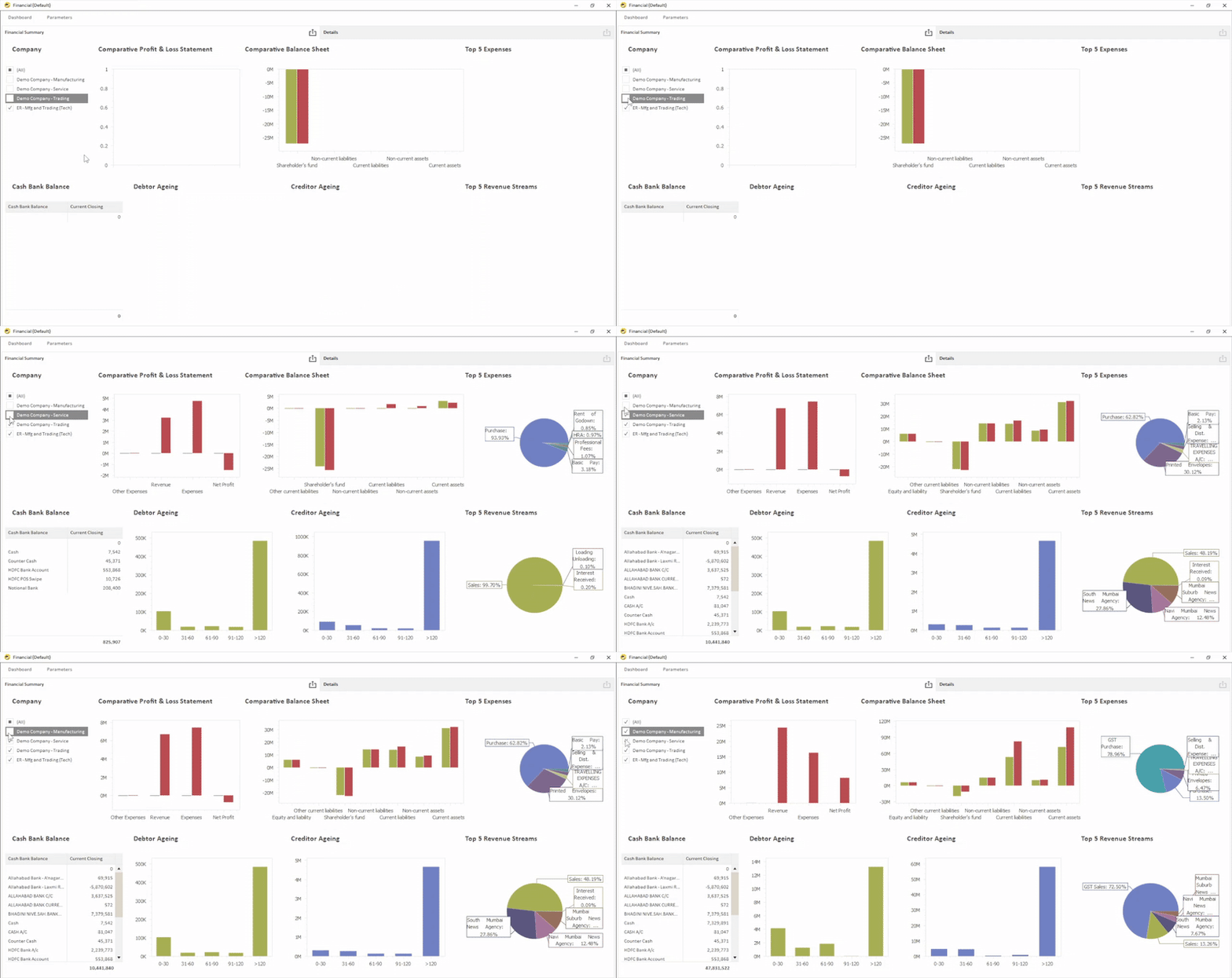
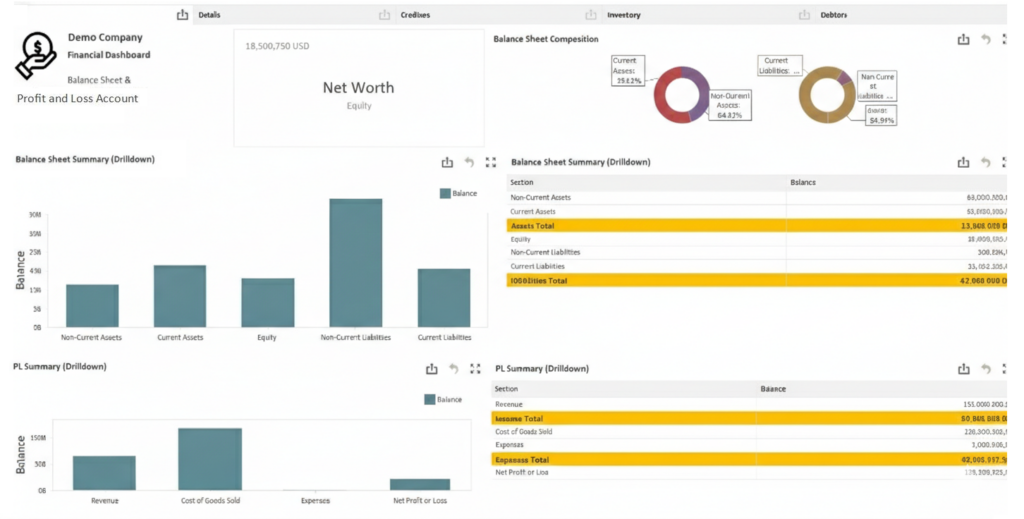
- Executive Dashboards Visual, real-time overviews of Net Worth, Assets, Liabilities, Revenue and Profitability all in one screen.
Step 4: Distribute Management-Ready Financial Insights
The final step is getting reports to the right people at the right time. Modern reporting tools like EasyReports schedule and distribute reports automatically using the ER Report Scheduler, so management receives their dashboards the moment the period closes, not days later.
This is how modern financial reporting actually works: no waiting, no reformatting, no manual work.
What Reports Does a Smart Financial Reporting System Produce?
A complete financial reporting solution like EasyReports Smart Financial Statements produces:
- Balance Sheet: View assets, liabilities and equity in Pivot and Spreadsheet formats
- Profit & Loss Account: Analyze income and expenses in Pivot and Spreadsheet formats
- Trial Balance Pivot: With drill-down capability
- Financial Dashboard: Net Worth, Asset & Liability overview, Revenue & Profit summary
- Creditors Dashboard & Pivot Reports: Outstanding payables tracking, ageing analysis
- Debtors Dashboard & Pivot Reports: Receivables and ageing analysis
- Inventory Dashboard: Material-wise quantity and value insights
- Cash Flow Mapping Reports: Structured cash flow statements
All reports maintain a consistent period structure, so comparing January to December or FY2025 to FY2026 is instant, not a manual exercise.
Why Does This Matter in 2026?
In 2026, businesses operate in multi-entity, multi-currency environments. Finance teams are expected to deliver faster, more accurate reporting than ever before with smaller teams and tighter deadlines.
That is exactly why understanding how modern financial reporting actually works is no longer optional. It is a competitive advantage.
How Do You Get Started with Smart Financial Reporting?
Getting started is simpler than most finance teams expect, EasyReports Smart Financial Statements handles the entire process.
Ready to see how modern financial reporting actually works for your business? Discover how EasyReports Smart Financial Statements automate everything from trial balance upload to real-time dashboards. Book a free demo today.
FAQs: How Modern Financial Reporting Actually Works
1) What is modern financial reporting?
Modern financial reporting uses automation to collect and transform financial data into dashboards, pivot reports, and audit-ready financial statements.
2) How does modern financial reporting work from trial balance to dashboard?
It imports trial balance data, maps ledgers into a standard structure, generates reports, and automatically delivers insights to stakeholders.
3) Why do finance teams struggle with traditional reporting?
Because they spend too much time collecting data, reconciling figures and formatting reports manually.
4) What are the key steps in automated financial reporting?
Capture data, map ledgers, generate reports, and distribute insights automatically.
5) What reports can a smart financial reporting system generate?
Balance sheets, profit & loss statements, dashboards, ageing reports, inventory insights, and cash flow statements.
6) How do dashboards improve financial decision-making?
Dashboards show real-time financial performance, helping leaders make faster and smarter decisions.
7) Why is automated financial reporting important in 2026?
It enables faster, accurate reporting for multi-entity and multi-currency businesses with tighter deadlines.
8) How can businesses get started with smart financial reporting?
By implementing tools like EasyReports to automate reporting from trial balance to dashboards.